
Joomla SEO in 2026: Tips, Techniques, and Best Practices
Joomla SEO is the practice of configuring Joomla content, URLs, metadata, technical crawl signals, and schema so search engines can index pages cleanly and rank them for classic blue-link results. In 2026 you also need GEO (Generative Engine Optimization): structuring the same Joomla pages so AI Overviews, ChatGPT, Perplexity, and other generative engines can extract, trust, and cite your answers.
I have optimized Joomla sites long enough to see the same pattern: rankings drop when technical basics break, content targets the wrong intent, or extensions fight the core router. Traffic also stalls when pages are invisible to AI answer engines. This guide is a practical 2026 playbook for Joomla 4, 5, and 6 that covers both SEO and GEO.
What you will learn
- How Joomla SEO and GEO work together in 2026
- How to turn on search-engine-friendly URLs the right way
- How to write meta titles, descriptions, and answer-first content AI can quote
- Which technical SEO and crawl checks matter most on Joomla
- How schema, FAQs, and entity-rich blocks support rich results and AI citations
- How to choose SEO extensions without stacking conflicting routers
SEO vs GEO for Joomla
SEO helps Google and Bing rank your URLs in traditional results. GEO helps generative engines understand entities on the page, lift quotable facts, and attribute answers back to you. On Joomla, the strongest stack does both: clean SEF and Core Web Vitals for crawlers, plus definition blocks, FAQs, statistics, and schema for AI extractors.
| Signal | Classic Joomla SEO | GEO for Joomla |
|---|---|---|
| Primary goal | Rank URLs and win clicks | Get cited inside AI answers |
| Content shape | Keyword-aligned pages | Answer-first definitions, FAQs, citable stats |
| Markup | Titles, canonicals, sitemaps | FAQ/HowTo/Article schema + clear entities |
| Freshness | Helpful for rankings | Critical for generative trust |
| Success metric | Impressions, CTR, rankings | Citations, brand mentions in AI answers |
For a deeper GEO implementation path on Custom Fields, JSON-LD, and AI crawler access, use our full guide to GEO for Joomla.
Joomla SEO and GEO checklist at a glance
| Area | What to do in Joomla | Why it matters |
|---|---|---|
| URLs | Enable SEF + URL Rewriting, keep trailing-slash policy consistent | Clean routes for crawlers and AI bots |
| Metadata | Unique title and meta description per important page | Higher CTR and clearer relevance |
| GEO content | Lead with definitions, FAQs, tables, and quotable takeaways | Easier extraction by generative engines |
| Crawl | XML sitemap + robots.txt + intentional AI crawler policy | Discovery without unwanted bot chaos |
| Schema | Article/Breadcrumb plus FAQ, HowTo, or Product when relevant | Rich results and machine-readable answers |
| Speed | Caching, image compression, CDN, Core Web Vitals | Ranking and conversion support |
| Languages | Associations + Language Filter for hreflang | Correct international targeting |
Step 1: Enable search engine friendly URLs
According to the official Joomla SEF URLs guide, clean routes help both humans and crawlers. Without SEF, a category blog can look like a long query string. With SEF and rewriting, it becomes a readable path that AI systems can also attribute more cleanly.
- Go to System → Global Configuration → Site.
- Set Search Engine Friendly URLs to Yes.
- Set Use URL Rewriting to Yes.
- On Apache, rename
htaccess.txtto.htaccessin the site root (or apply the equivalent rewrite rules on Nginx). - Pick one trailing-slash policy and keep it site-wide to avoid duplicate URLs.
Bottom line: short, descriptive aliases beat long auto-generated paths. Keep menu aliases and article aliases intentional.
Step 2: Do keyword and entity research before you write
Classic keyword research tells you what people search and how competitive those terms are. For GEO, also identify the entities AI systems need: product names, versions, stats, definitions, and who/what/where facts. Broad head terms like “Joomla” often have very high difficulty. Long-tail question queries convert better and are easier to answer in FAQ blocks.
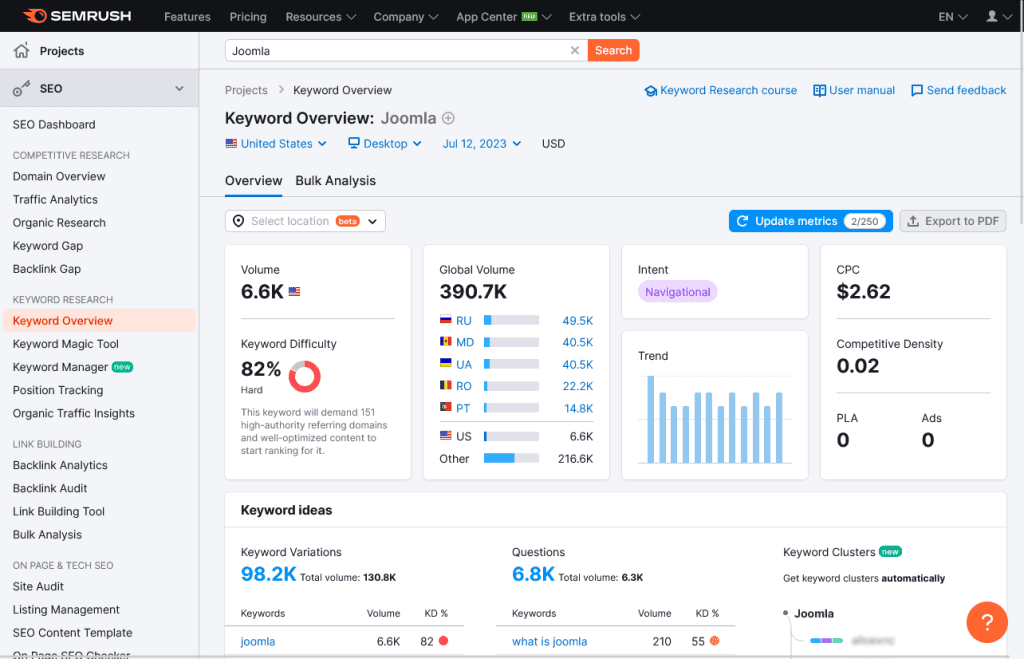
- Use Google Keyword Planner, Ahrefs, SEMrush, or Moz for volume and difficulty
- Mine Google Autocomplete and “People also ask” for FAQ candidates
- Map one primary intent per page, then support it with related H2 questions
- Put the primary phrase in the title, first-paragraph definition, one H2, and the SEF alias when natural
Step 3: Optimize on-page titles and answer-first content
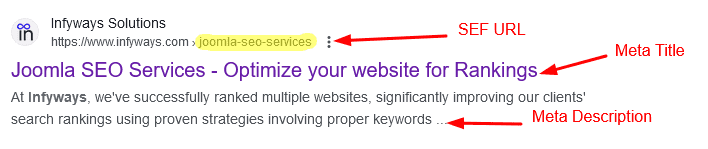
For SEO, the blue link is usually your meta title and the supporting text is your meta description. For GEO, the first paragraph should answer the query directly so models can quote it. Example pattern from our services page: a clear title around Joomla SEO Services with a clean slug like joomla-seo-services, plus a definition up top.
- One H1 per page that matches the page promise
- Answer-first intro that defines the topic in one or two sentences
- H2/H3 hierarchy that mirrors how a reader or model scans the topic
- Meta titles around 50 to 60 characters with the primary keyword near the front
- Meta descriptions around 150 to 160 characters that earn the click
- FAQ sections with real questions ending in a question mark
- Image file names, alt text, and compressed assets for relevance and speed
Step 4: Fix technical SEO and AI crawl signals
Speed and Core Web Vitals
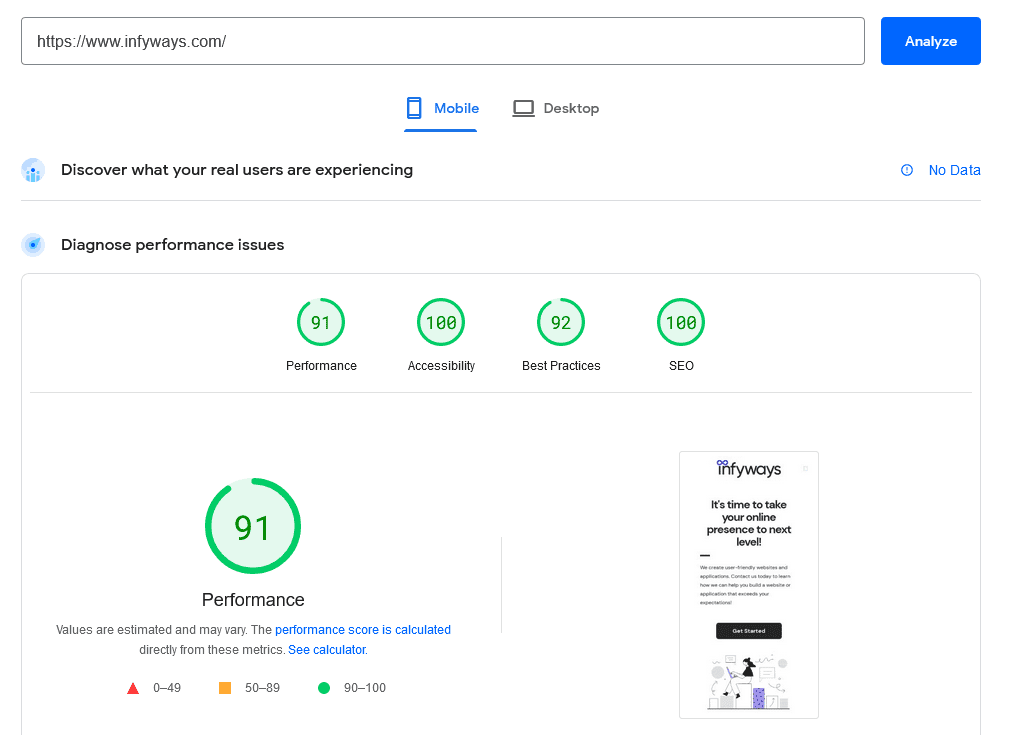
Use caching, optimized images (WebP/AVIF where possible), fewer blocking requests, and a CDN when traffic is global. Validate with PageSpeed Insights on both mobile and desktop.
XML sitemaps, robots.txt, and AI crawlers
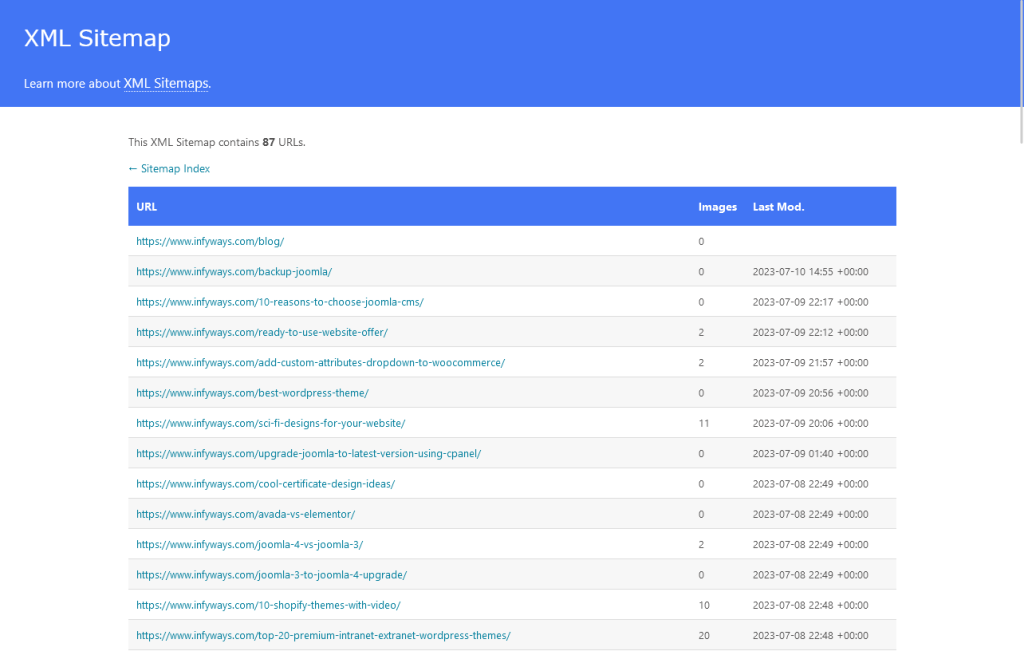
Give search crawlers a clear map of important URLs and block only what should stay private. For GEO, review whether bots such as GPTBot, ClaudeBot, or PerplexityBot should be allowed on public content pages. Be intentional: allow the engines you want citations from, and keep staging or private areas closed.
Canonicals, redirects, and duplicate content
Joomla can create similar URLs through menu items, print views, or parameter variants. Set a preferred canonical, use 301 redirects for retired URLs, and avoid publishing near-duplicate articles that compete for the same query or confuse generative summarizers.
Structured data for SEO rich results and GEO extraction
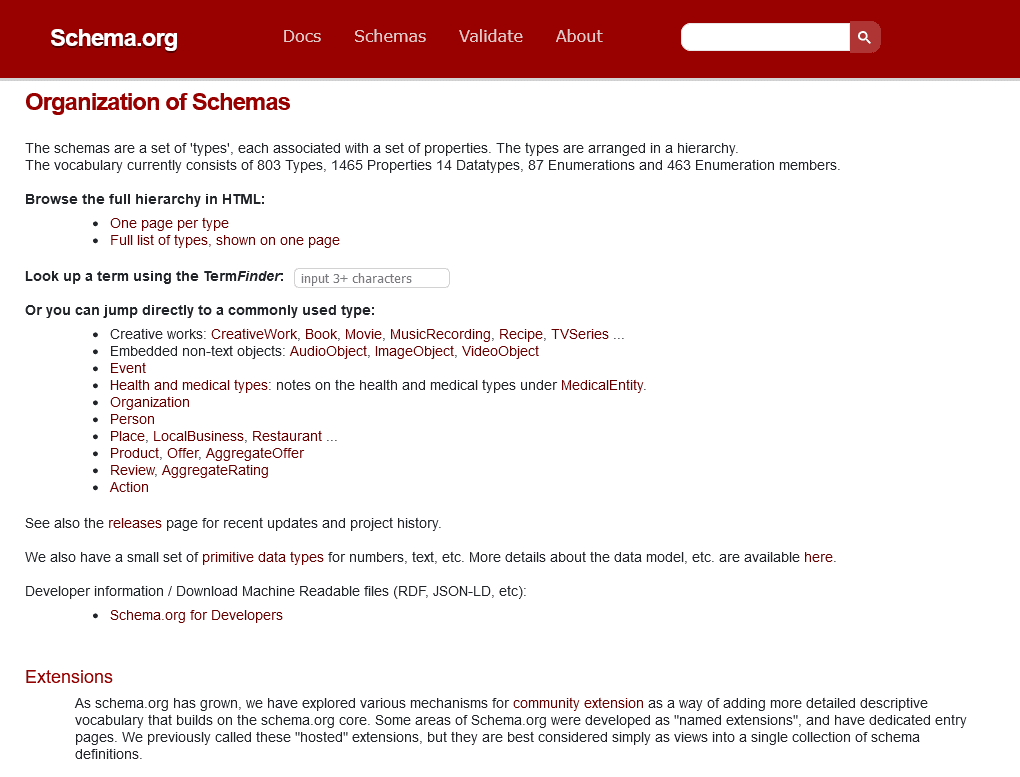
Joomla’s newer releases include useful core schema foundations for articles and breadcrumbs. FAQ, HowTo, Product, Event, and LocalBusiness often still need an extension or carefully added JSON-LD. Those same FAQ and HowTo blocks are high-value GEO assets because they package answers in extractable units. Validate with the Google Rich Results Test.
Step 5: Choose SEO extensions carefully
Extensions help SEO and GEO workflows, but stacking multiple SEF routers is a common way to break a site. Browse the official JED SEO category, then pick one clear stack.
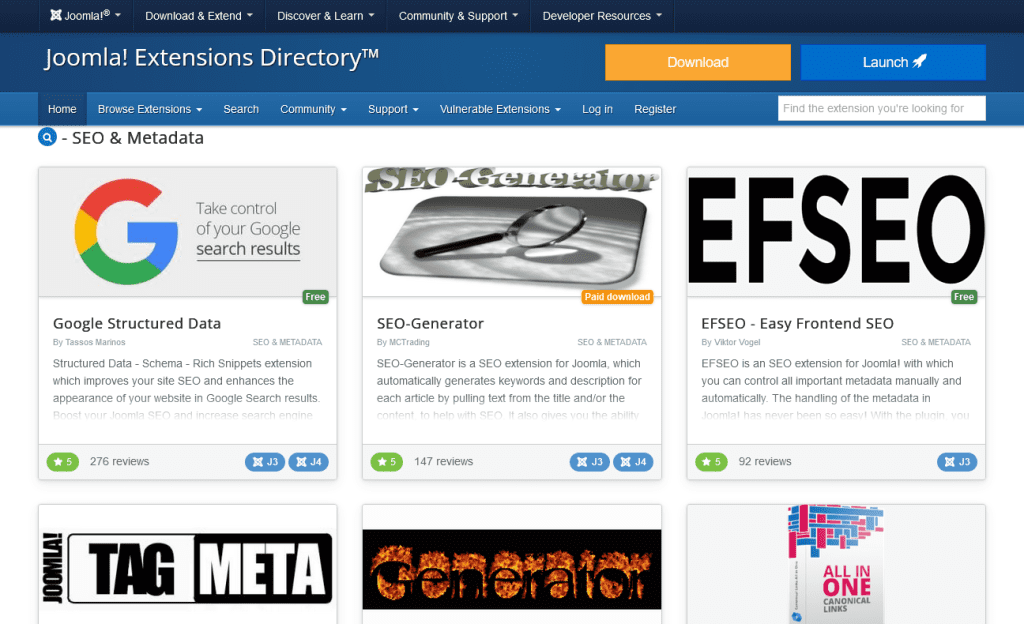
- All-in-one technical SEO: 4SEO is a common modern choice for titles, canonicals, redirects, audits, and schema on current Joomla versions
- Sitemaps: OSMap, Aimy Sitemap, or a maintained sitemap extension if core is not enough
- Schema-focused: Google Structured Data style extensions when you need Product, Event, or rich FAQ markup for both SEO and GEO
- Performance: caching and image optimization tools, kept separate from the SEF router when possible
Before installing anything, confirm Joomla version compatibility, active maintenance, and whether the extension replaces or complements core SEF.
Step 6: Build content that ranks and gets cited
- Write for one primary question per page, then answer related sub-questions in H2s and FAQs
- Lead with a definition or direct answer before long storytelling
- Add tables, stats with sources, and short takeaways models can quote
- Use descriptive internal anchors to related guides and service pages
- Keep multilingual associations complete so hreflang stays accurate
- Refresh dates, screenshots, and product version notes on a schedule (freshness helps GEO)
If you need hands-on help implementing this SEO + GEO stack, Infyways offers dedicated Joomla SEO services for audits, technical fixes, and content upgrades.
Key takeaways
- Treat Joomla SEO and GEO as one system: rank in classic search and earn AI citations.
- Turn on SEF URLs and URL rewriting before chasing advanced plugins.
- Match one search intent per page with unique titles, definitions, FAQs, and aliases.
- Protect crawl quality with sitemaps, robots.txt, canonicals, redirects, and an intentional AI-bot policy.
- Use schema where it adds rich-result and extractable-answer value, then validate it.
- Pick one SEO stack; do not run competing SEF routers.
- Measure rankings and citations, then refresh content on a schedule.
Frequently asked questions
What is Joomla SEO?
Joomla SEO is optimizing a Joomla site’s content, URLs, metadata, crawl settings, speed, and schema so search engines can rank the right pages for the right queries.
What is GEO for Joomla?
GEO (Generative Engine Optimization) for Joomla means structuring pages so generative engines can find clear entities, quote accurate answers, and cite your site inside AI Overviews and chatbot responses.
Is GEO a replacement for SEO?
No. GEO builds on SEO. You still need crawlable URLs, strong content, and technical health. GEO adds answer-first formatting, FAQs, citable facts, and schema that help AI systems reuse your work.
How do I make Joomla URLs SEO friendly?
Enable Search Engine Friendly URLs and Use URL Rewriting in Global Configuration, set up server rewrites, and keep aliases short and descriptive.
Do I need SEO extensions for Joomla?
Not always. Core SEF, good content, and careful configuration can go far. Extensions help when you need advanced redirects, audits, multilingual controls, or richer schema types that support both SEO and GEO.
Which Joomla SEO mistakes hurt rankings and AI citations most?
Duplicate URLs, keyword stuffing, thin copied content, missing FAQs or definitions, weak schema, and installing multiple conflicting SEF extensions are the most common failures.
How should I measure Joomla SEO and GEO success?
Track Search Console queries and rankings for SEO. For GEO, monitor brand mentions in AI answers, referral patterns from AI tools when available, and whether your definitions and FAQs are being reused accurately.
Conclusion
Joomla SEO in 2026 is not about installing every plugin in the JED, and GEO is not a separate gimmick. Clean URLs, intent-matched content, trustworthy technical signals, answer-first formatting, and measured iteration work together. Start with SEF and metadata, fix crawl and speed issues, add FAQ/schema where it helps generative engines cite you, and keep one coherent extension stack. Do that consistently and Joomla remains a strong platform for organic search and AI visibility.